Complementary Pairing
Select outdoor surface tones that sit opposite your living room's dominant colour on the colour wheel, creating dynamic contrast that energizes both spaces while maintaining visual connection.
Create visual continuity between your interior living spaces and outdoor recreation areas through coordinated surface colour selection that complements existing design schemes.
Modern Australian homes increasingly blur boundaries between interior and exterior spaces. When your outdoor recreation surface coordinates with living room tones, the transition feels intentional rather than abrupt, expanding perceived space and creating cohesive design flow.
Our surface materials are available in carefully curated colour ranges that correspond to popular interior palettes, allowing you to extend your home's aesthetic language beyond walls and windows.
Select outdoor surface tones that sit opposite your living room's dominant colour on the colour wheel, creating dynamic contrast that energizes both spaces while maintaining visual connection.
Choose recreation area colours adjacent to your interior scheme, allowing subtle shifts in hue that feel natural and harmonious when viewed through doorways or windows.
Use lighter or darker variations of your living room's primary colour for outdoor surfaces, creating depth through tonal progression rather than hue changes.
Employ neutral outdoor tones that allow bold interior colours to remain focal while providing calm, versatile backdrop for furniture and plantings.
Match outdoor surface colour to accent elements within your living room such as cushions, artwork, or decorative objects, creating subtle visual threads.
Select earth tones for recreation surfaces that echo natural materials present in interior design, such as timber furniture or stone features.
Warm Grey Living Room
Soft grey walls with timber accents and cream upholstery
Charcoal or Sandstone
Deeper grey maintains sophistication; sandstone adds warmth
Coastal Blue Living Room
Pale blue walls with white trim and natural fiber textures
Driftwood Grey or Terracotta
Grey echoes beach tones; terracotta provides warm contrast
Earth Tone Living Room
Terracotta, ochre, and olive with natural materials
Forest Green or Clay Red
Green extends natural palette; clay deepens earth connection
Minimalist White Living Room
White walls with black accents and minimal colour
Slate Black or Concrete Grey
Black maintains stark aesthetic; grey softens transition
Darker colours absorb more solar radiation, becoming hotter underfoot during summer months. Consider lighter tones for high-traffic barefoot areas or spaces with limited shade coverage.
Mid-tone colours typically show less dirt and wear than very light or very dark options, reducing maintenance frequency while preserving appearance over time.
All our surfaces include UV stabilizers, but some colours naturally resist visible fading better than others. Earth tones and greys typically age more gracefully than bright hues.
Consider how surface colour interacts with surrounding vegetation. Neutral tones allow plants to stand out, while green surfaces can blend into landscape context.
We help you select outdoor recreation surface colours that enhance your home's overall design coherence through a structured consultation approach.
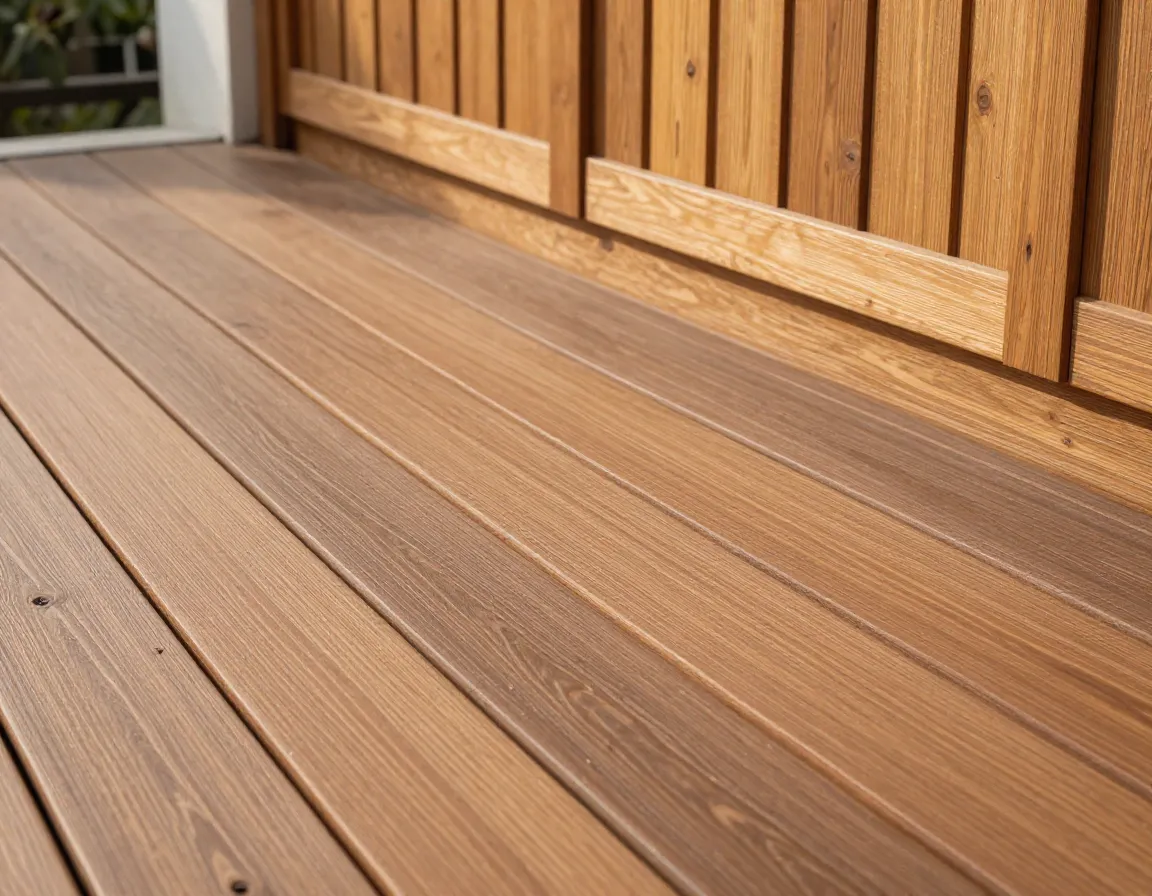
Recreation surfaces in complementary tones create seamless visual flow between indoor living areas and outdoor activity zones, enhancing spatial perception and design unity.
We use essential cookies to ensure proper website functionality. By continuing, you accept our Privacy Policy.